

พี่หมอนิริน
ท็อปอังกฤษ 1% ของประเทศ (เปอร์เซ็นไทล์ 99.8) · เกียรตินิยม ทันตแพทยศาสตร์ จุฬาลงกรณ์มหาวิทยาลัย
อัปเดตล่าสุด 20 พ.ย. 2569
สรุปคำตอบสั้น ๆ
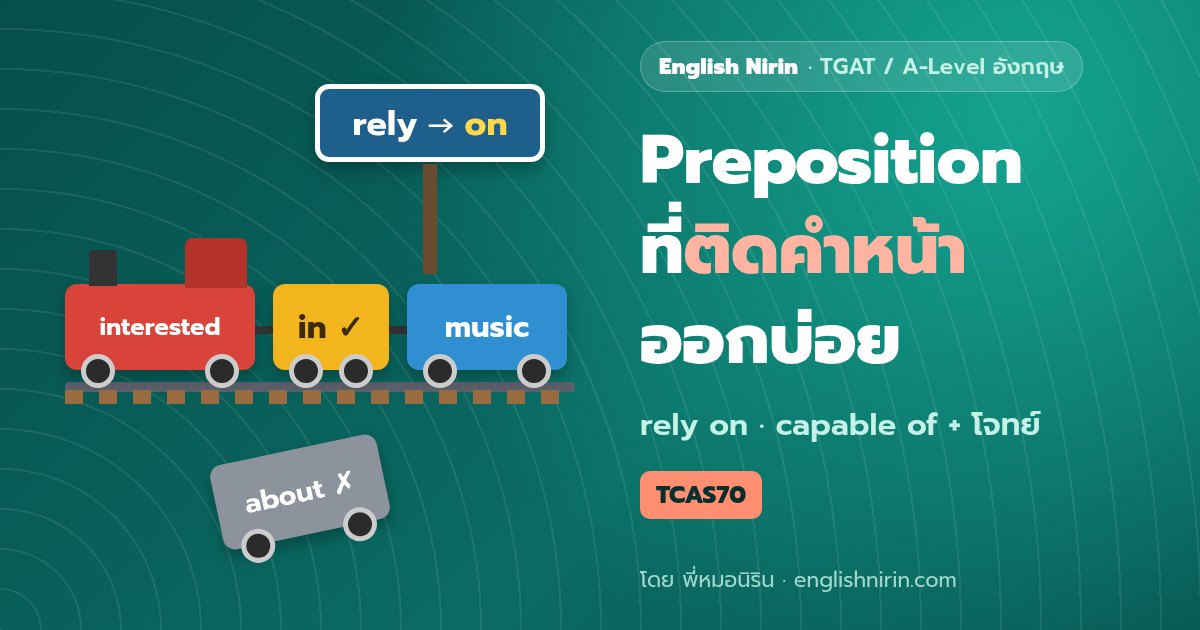
Preposition ที่ออกข้อสอบ TGAT/A-Level ส่วนใหญ่ไม่ใช่ in/on/at บอกเวลา แต่เป็น dependent preposition คือบุพบทที่ถูกกำหนดโดยคำข้างหน้า เช่น rely on, capable of, interested in. วิธีทำคือดู คำหน้าช่องว่าง แล้วนึกคู่ที่จำไว้ ไม่ต้องแปลทั้งประโยค. และจำไว้ว่า หลังบุพบทต้องเป็นคำนามหรือ V-ing เสมอ.
ประเด็นสำคัญ
- ข้อสอบเติมคำมักถามบุพบทที่ "ติด" มากับคำหน้า (กริยา คุณศัพท์ คำนาม) มากกว่า in/on/at บอกเวลา-สถานที่
- จำเป็นคู่ คำ+บุพบท เช่น depend on, responsible for, aware of ห้ามแปลจากภาษาไทยตรง ๆ
- คำเดียวกันเปลี่ยนบุพบท ความหมายเปลี่ยน: good at (เก่ง) / good for (ดีต่อ), angry with คน / angry about เรื่อง
- หลังบุพบทใช้คำนามหรือ V-ing เท่านั้น เช่น capable of solving ไม่ใช่ capable of solve
- กริยาบางตัวไม่ต้องมีบุพบท: discuss, enter, marry, reach, approach — ตัวเลือกที่เติม about/into มักเป็นตัวลวง
- ฝึกด้วยการจัดกลุ่มตามบุพบท (of / in / on / for / to / with) วันละกลุ่ม ได้ผลกว่าท่องเรียง A–Z

🎯 อยากอัปคะแนน TGAT + A-Level ENG ให้ถึง 80–90+? ดูคอร์สอังกฤษ TCAS + ตะลุยโจทย์ 5,990 บาท หรือ ทัก LINE @englishnirin
Preposition ออกข้อสอบ TGAT/A-Level แบบไหน?
ส่วนใหญ่ออกเป็นช่องว่างให้เติมบุพบทที่ต้องคู่กับคำข้างหน้า ตัวเลือก 4 ตัวมักเป็น in / on / of / for หรือ to / with / about / at. ข้อสอบไม่ค่อยถามว่า in the morning หรือ on Monday เพราะง่ายเกินไปสำหรับระดับนี้.
- TGAT ENG — เจอในพาร์ตเติมคำ (Text Completion) ที่ช่องว่างอยู่ถัดจากกริยาหรือคุณศัพท์ เช่น depend ___ ดูขั้นตอนทำพาร์ตนี้ได้ที่ เทคนิค Text Completion TGAT ENG และภาพรวมข้อสอบที่ หน้า TGAT ENG
- A-Level อังกฤษ — เจอในข้อเลือกประโยคที่ถูกไวยากรณ์ และใน Reading ที่บทความวิชาการใช้ result in, consist of, contribute to บ่อยมาก ดูโครงสร้างข้อสอบได้ที่ หน้า A-Level อังกฤษ
สรุปง่าย ๆ: ถ้าช่องว่างอยู่หลังคำอย่าง rely, aware, responsible ให้นึกถึง คู่ที่จำไว้ ก่อน ไม่ต้องเสียเวลาแปลทั้งประโยค.
Dependent preposition คืออะไร ทำไมต้องจำเป็นคู่?
Dependent preposition คือบุพบทที่ “ขึ้นอยู่กับ” คำข้างหน้า ไม่ได้เลือกจากความหมายของบุพบทเอง. เช่น interested in ไม่มีเหตุผลทางตรรกะว่าทำไมต้องเป็น in จึงต้องจำเป็นก้อน.
ปัญหาของนักเรียนไทยคือแปลจากภาษาไทย: “สนใจเกี่ยวกับ” → about, “มีชื่อเสียงของ” → of, “ขึ้นอยู่กับ” → with. ตัวลวงในข้อสอบสร้างจากความผิดแบบนี้แทบทั้งหมด.
Adjective + Preposition ที่ออกบ่อย (จัดกลุ่มตามบุพบท)
จำแบบแยกตามบุพบทง่ายกว่าเรียง A–Z เพราะสมองจับกลุ่มได้. ตารางนี้คัดเฉพาะคำระดับ ม.ปลายที่เจอในบทความและโจทย์เติมคำบ่อย.
| บุพบท | คุณศัพท์ที่ใช้คู่กัน | ตัวอย่าง |
|---|---|---|
| of | aware, capable, afraid, proud, full, typical, short | Teens are aware of the risks. |
| in | interested, involved, rich, successful | She is interested in marine biology. |
| for | responsible, famous, suitable, eligible, grateful (สิ่ง) | This job is suitable for students. |
| to | similar, related, sensitive, committed, addicted, used | His answer is similar to mine. |
| with | satisfied, familiar, crowded, popular, concerned | Are you familiar with the app? |
| about | anxious, worried, excited, curious, serious | He is anxious about the interview. |
| at / on | good, bad, skilled (at) · keen, dependent, based (on) | The film is based on a true story. |
ทริคจำเร็ว
- of มักเป็นความรู้สึก/การรับรู้ต่อสิ่งหนึ่ง (aware, afraid, proud)
- for มักมีความหมาย “สำหรับ/เพื่อ” (suitable, responsible, famous)
- to มักเป็นความสัมพันธ์ไปหาอีกสิ่ง (similar, related, committed)
ทริคนี้ช่วยเดาได้ระดับหนึ่ง แต่ไม่ใช่กฎ 100% คำที่เจอบ่อยในตารางยังต้องจำให้ได้.
Verb + Preposition ที่ออกบ่อย
กริยาที่ต้องมีบุพบทตามเป็นอีกกลุ่มที่ข้อสอบชอบถาม โดยเฉพาะในบทความวิชาการของ A-Level. ต่างจาก phrasal verb ตรงที่ความหมายยังเดาได้จากกริยาหลัก แค่บุพบทถูกบังคับ.
| บุพบท | กริยาที่ใช้คู่กัน |
|---|---|
| on | rely, depend, focus, concentrate, insist, comment, spend (money) |
| in | believe, succeed, participate, invest, result (ทำให้เกิด) |
| from | suffer, benefit, differ, recover, prevent ~ from, protect ~ from |
| for | apply, search, wait, account, pay, blame ~ for |
| to | respond, contribute, belong, adapt, object, refer, lead (นำไปสู่) |
| with | deal, cope, agree (กับคน), provide ~ with, compare ~ with |
| of | consist, approve, dispose, accuse ~ of, remind ~ of |
กริยาที่ไม่ต้องมีบุพบท (ตัวลวงยอดฮิต)
กริยาเหล่านี้ตามด้วยกรรมได้ทันที ถ้าตัวเลือกเติมบุพบทให้มักผิด:
- discuss the plan (ไม่ใช่ discuss about)
- enter the room (ไม่ใช่ enter into the room)
- reach the station (ไม่ใช่ reach to)
- marry someone (ไม่ใช่ marry with)
- approach the problem, contact the office, answer the question
ระวัง: รูปคำนามมีบุพบทได้ เช่น a discussion about, an answer to, contact with. ข้อสอบจะใช้จุดนี้หลอก.
คำเดียวกัน เปลี่ยนบุพบทแล้วความหมายเปลี่ยน
ข้อสอบระดับยากจะใส่บุพบทที่ “ถูกไวยากรณ์ทั้งคู่” แต่ความหมายต่างกัน คุณต้องอ่านบริบทให้ออกว่าประโยคสื่อแบบไหน.
| คู่คำ | ความหมาย | ตัวอย่าง |
|---|---|---|
| good at / good for | เก่ง (ทักษะ) / ดีต่อ (สุขภาพ ผลลัพธ์) | good at math · Sleep is good for memory. |
| responsible for / to | รับผิดชอบงาน / รายงานต่อใคร | responsible for the budget · responsible to the manager |
| result in / result from | ทำให้เกิดผล / เป็นผลมาจาก | Stress can result in poor sleep. · Poor sleep results from stress. |
| agree with / agree to / agree on | เห็นด้วยกับคน-ความคิด / ยอมรับข้อเสนอ / ตกลงเรื่องร่วมกัน | agree with you · agree to the plan · agree on a date |
| angry with / angry about | โกรธคน / โกรธเรื่อง | angry with her · angry about the delay |
| concerned about / concerned with | กังวลเรื่อง / เกี่ยวข้องกับ (ทางการ) | concerned about safety · The study is concerned with diet. |
คู่ result in / result from เจอบ่อยที่สุดใน Reading เพราะบอกทิศทางเหตุ-ผล ถ้าอ่านกลับด้านจะตอบคำถามเรื่องสาเหตุผิดทั้งข้อ.
หลังบุพบทต้องเป็นอะไร?
หลังบุพบทต้องเป็น คำนาม สรรพนาม หรือ V-ing เท่านั้น ห้ามเป็น V1 หรือ to V. ข้อสอบบางข้อเลยไม่ได้ถามบุพบท แต่ถามรูปกริยาหลังบุพบท เช่น capable of ___ (solve / solving).
- She is good at explaining ideas. ✓
- He insisted on paying the bill. ✓
- They succeeded in raise the money. ✗ → raising
เรื่อง to ที่เป็นบุพบท (เช่น look forward to, be used to) อธิบายละเอียดแล้วในบทความ Gerund vs Infinitive ข้อสอบ TGAT/A-Level และภาพรวมไวยากรณ์ที่ต้องแม่นดูได้ที่ Grammar TGAT ต้องแม่นแค่ไหน.
จุดที่นักเรียนพลาดบ่อยเรื่อง Preposition
จากที่พี่หมอนิรินเห็นตอนตรวจแบบฝึกหัด ความผิดเรื่องบุพบทมักซ้ำกันไม่กี่แบบ:
- แปลจากภาษาไทยตรงตัว — depend with, famous of, interested about มาจากคำไทยทั้งหมด
- ใส่บุพบทเกินให้กริยาที่ไม่ต้องมี — discuss about, enter into, reach to
- ลืมดูลำดับกรรม — provide someone with something กับ provide something for someone ใช้บุพบทต่างกัน
- ดูเฉพาะคำหลังช่องว่าง — ตัวกำหนดบุพบทคือคำหน้าช่อง ไม่ใช่คำหลัง
- เติม V1 หลังบุพบท — succeed in raise, instead of take
ถ้าพลาดแบบนี้บ่อย แปลว่ายังจำคู่คำไม่เป็นก้อน ใน คอร์สอังกฤษ TCAS ของพี่หมอนิริน จะฝึกคู่คำเหล่านี้ผ่านโจทย์เติมคำซ้ำ ๆ จนเห็นคำหน้าแล้วนึกบุพบทออกเอง.
โจทย์ฝึก Preposition 10 ข้อ พร้อมเฉลยเหตุผล
โจทย์ตัวอย่างที่แต่งขึ้นตามรูปแบบข้อสอบ ไม่ใช่ข้อสอบจริง ลองทำก่อนแล้วค่อยดูเฉลย.
ข้อ 1. Many small farmers still rely ___ rainfall because they cannot afford irrigation systems.
A. in
B. on
C. at
D. with
ข้อ 2. The new manager is capable ___ handling several projects at the same time.
A. to
B. for
C. of
D. in
ข้อ 3. Students who participate ___ volunteer work often develop strong communication skills.
A. in
B. on
C. to
D. for
ข้อ 4. The museum is famous ___ its collection of ancient Thai ceramics.
A. of
B. for
C. with
D. by
ข้อ 5. Regular exercise can help people recover ___ illness more quickly.
A. of
B. at
C. from
D. with
ข้อ 6. The committee will discuss ___ the new school rules next Monday.
A. about
B. on
C. over
D. (ไม่ต้องเติม)
ข้อ 7. Too much screen time before bed may result ___ poor concentration the next day.
A. from
B. in
C. to
D. of
ข้อ 8. She has always been interested ___ how languages change over time.
A. in
B. on
C. about
D. at
ข้อ 9. The hotel provides every guest ___ a free breakfast and a city map.
A. for
B. to
C. with
D. of
ข้อ 10. Parents are often worried ___ their children spending too much money online.
A. for
B. about
C. of
D. with
เฉลยพร้อมเหตุผล
- ข้อ 1: B — rely on = พึ่งพา เป็นคู่ตายตัว คำว่า because they cannot afford irrigation ยืนยันความหมายพึ่งพาฝน
- ข้อ 2: C — capable of + V-ing ตัวลวงคือ A (to) เพราะคนไทยมักนึกถึง able to แต่ capable ใช้ of เท่านั้น
- ข้อ 3: A — participate in = มีส่วนร่วมใน ความหมายเดียวกับ take part in
- ข้อ 4: B — famous for + สิ่งที่ทำให้มีชื่อเสียง ตัวลวง A (of) มาจากการแปลไทยว่า “มีชื่อเสียงของ”
- ข้อ 5: C — recover from = ฟื้นจาก อยู่กลุ่มเดียวกับ suffer from, benefit from ที่สื่อการออกจากสภาพหนึ่ง
- ข้อ 6: D — discuss เป็นกริยาที่ตามด้วยกรรมได้เลย discuss about ผิด แต่ถ้าเป็นคำนาม a discussion about ใช้ได้ — ตัวลวงยอดฮิต
- ข้อ 7: B — result in = ทำให้เกิด (เหตุ → ผล) screen time คือเหตุ poor concentration คือผล ถ้าสลับลำดับจะใช้ result from
- ข้อ 8: A — interested in + คำนาม/V-ing/how-clause ตัวลวง C (about) มาจากคำว่า “สนใจเกี่ยวกับ”
- ข้อ 9: C — provide + คน + with + ของ ถ้าเรียงแบบ provide + ของ + for/to + คน จะใช้ for/to แทน ข้อนี้คนอยู่หน้า จึงใช้ with
- ข้อ 10: B — worried about + เรื่องที่กังวล ตามด้วย V-ing (spending) ได้ เพราะหลังบุพบทใช้ V-ing
ถ้าผิดข้อ 6 ให้ทบทวนกลุ่มกริยาที่ไม่ต้องมีบุพบท ถ้าผิดข้อ 7 หรือ 9 ให้กลับไปดูตารางคู่ที่ความหมาย/ลำดับกรรมเปลี่ยน.
อ่านมาถึงตรงนี้แล้วอยากมีคนช่วยตรวจว่าเราคิดถูกทางไหม? คอร์สอังกฤษ TCAS + คอร์สตะลุยโจทย์ TGAT ENG & A-Level ENG มีเฉลยแบบอธิบายเหตุผลทุกตัวเลือก และมีทีมติวเตอร์ตอบคำถามให้
แผนจำ Preposition ใน 7 วัน
- วันที่ 1: กลุ่ม of (คุณศัพท์ + กริยา) แต่งประโยคเรื่องตัวเองคำละ 1 ประโยค
- วันที่ 2: กลุ่ม in และ on
- วันที่ 3: กลุ่ม for และ from
- วันที่ 4: กลุ่ม to และ with
- วันที่ 5: กลุ่ม about + กริยาที่ไม่ต้องมีบุพบท
- วันที่ 6: คู่ที่ความหมายเปลี่ยน ทำการ์ดสองด้าน
- วันที่ 7: ทำโจทย์ชุดบนแบบจับเวลา ข้อละไม่เกิน 20 วินาที แล้วจดคู่ที่ผิดลงสมุด
ระหว่างอ่านบทความภาษาอังกฤษ ให้ขีดเส้นใต้คู่คำ+บุพบทที่เจอ จะจำได้ไวกว่าท่องจากลิสต์. อยากได้โจทย์เติมคำแนว TGAT/A-Level เพิ่มพร้อมเฉลยละเอียด ดู คอร์สอังกฤษตะลุยโจทย์ TGAT และ A-Level หรือทัก LINE @englishnirin.
คำถามที่พบบ่อย
Preposition ในข้อสอบ TGAT ต้องจำกี่คู่?
ไม่ต้องจำเป็นร้อย เริ่มจากคู่ในตารางบทความนี้ (ประมาณ 60–70 คำ) ซึ่งเจอบ่อยในโจทย์เติมคำและบทความ Reading แล้วค่อยเพิ่มจากที่อ่านเจอ
interested ตามด้วย in หรือ about?
ใช้ interested in เช่น interested in science ส่วน about ใช้กับ excited about, worried about
rely on กับ depend on ต่างกันไหม?
ทั้งคู่ใช้ on และความหมายใกล้กัน rely on เน้นความไว้ใจว่าพึ่งได้ ส่วน depend on ใช้ได้ทั้งพึ่งพาและขึ้นอยู่กับ
discuss about ผิดจริงไหม?
ผิดในข้อสอบ เพราะ discuss ตามด้วยกรรมได้เลย (discuss the problem) แต่คำนาม discussion ใช้ about ได้
หลังบุพบทใช้ to V ได้ไหม?
ไม่ได้ หลังบุพบทต้องเป็นคำนามหรือ V-ing เช่น interested in learning ดูกรณี to ที่เป็นบุพบทเพิ่มได้ที่ บทความ Gerund vs Infinitive
dependent preposition ต่างจาก phrasal verb ยังไง?
dependent preposition คือบุพบทที่คำข้างหน้าบังคับ ความหมายยังมาจากคำหลัก (rely on = พึ่งพา) ส่วน phrasal verb ความหมายเปลี่ยนเป็นสำนวนใหม่ เช่น give up = เลิก
คอร์สแนะนำจากพี่หมอนิริน
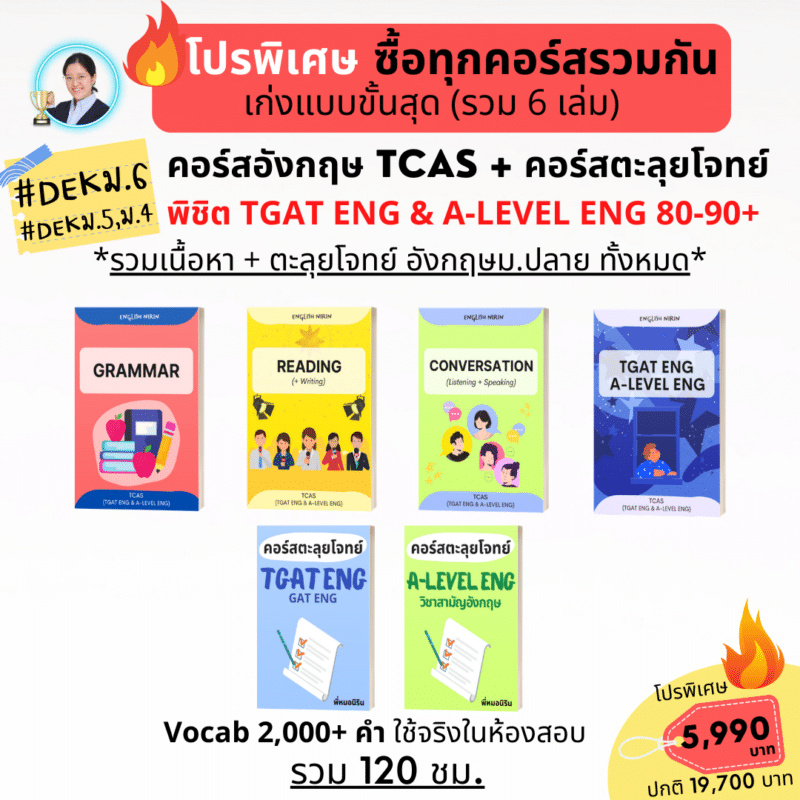
คอร์สอังกฤษ TCAS + คอร์สตะลุยโจทย์ TGAT ENG & A-Level ENG
- ✅ เนื้อหาครอบคลุมอังกฤษ ม.ปลายทั้งหมด ปูพื้นฐานจนถึงทำโจทย์ทุกรูปแบบ
- ✅ ตะลุยโจทย์ TGAT ENG และ A-Level ENG พร้อมหลักการ สูตรลัด และเทคนิค
- ✅ หนังสือ 6 เล่ม ส่งฟรีถึงบ้าน
- ✅ มีทีมติวเตอร์ช่วยตอบคำถามระหว่างเรียน
- ✅ เรียนได้ทั้งคอม มือถือ และแท็บเล็ต
ราคาพิเศษ
5,990 บาท
สมัครเรียนทาง LINE @englishnirin
แอดไลน์ @englishnirin แล้วพิมพ์ว่า “สนใจคอร์ส 5,990” ทีมงานจะส่งรายละเอียดและวิธีสมัครให้
ดูรีวิวคะแนนจากน้อง ๆ · ดูรายละเอียดคอร์สอังกฤษ ม.ปลายทั้งหมด
